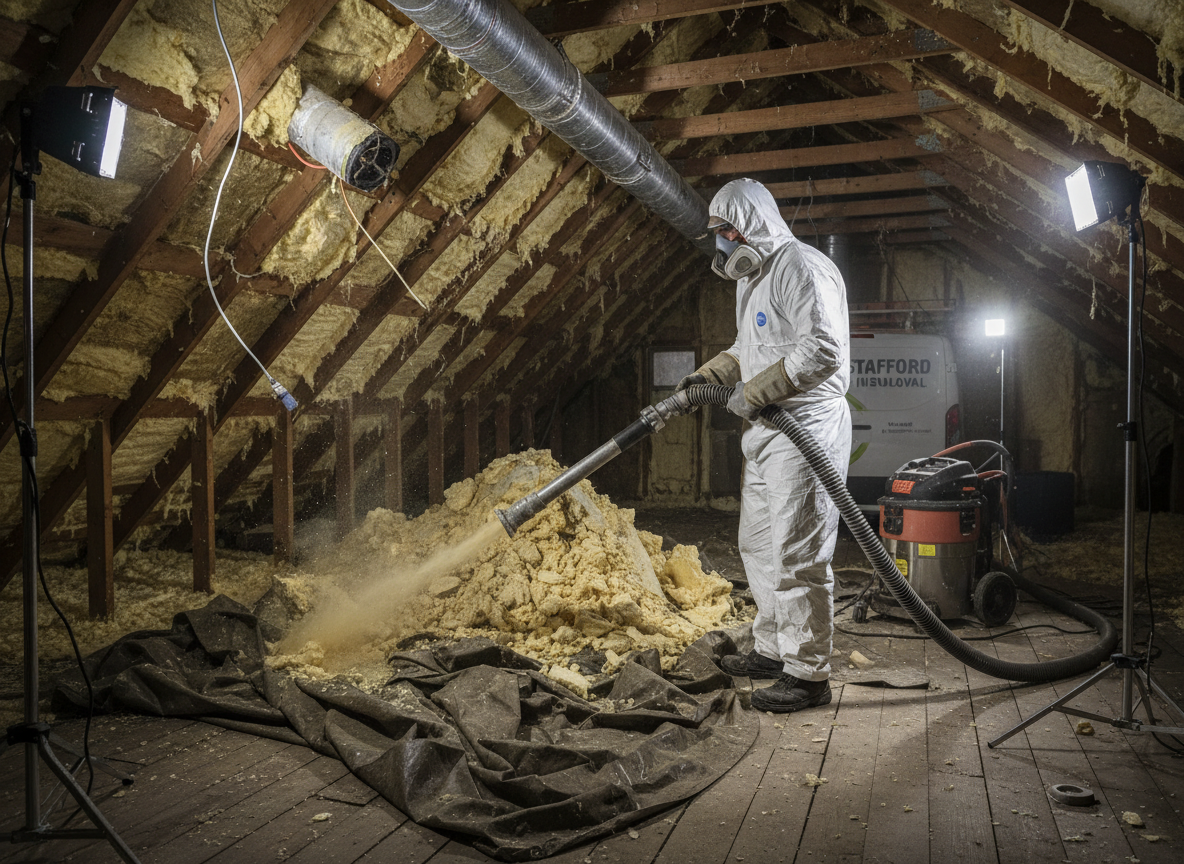
Attic spray foam removal in Stafford often involves closed-cell polyurethane that was applied over original lath and plaster or between rafters in Victorian terraces and 1930s semis common around Tipping Street and the town centre. These installations trap moisture against timber because Staffordshire's frequent rainfall and high humidity prevent drying, leading to rot in joists and sarking boards. Removal requires cutting the foam into manageable sections with oscillating tools while supporting the ceiling from below to avoid collapse, followed by vacuum extraction of residue and inspection for hidden water damage.
Edge cases in the Stafford area include foam that has bonded to electrical cables or pipework in post-war council houses around the Doxey and Holmcroft estates. Pulling too aggressively can damage wiring or create leaks in old lead pipe runs. Technicians must isolate power and water before starting, then use non-destructive methods such as dry-ice blasting on delicate surfaces. After foam is gone, attics need ventilation upgrades because original roof spaces were never designed for the vapour barrier effect the foam created.
Local building regulations in Stafford require that any disturbance of insulation in lofts over 50 years old includes checks for asbestos in textured coatings or vermiculite. Homeowners along the River Sow corridor also face higher risk of water ingress once foam is removed, so temporary tarpaulins and drying equipment are standard on jobs. Full documentation of the existing structure is recorded before work begins to satisfy insurance requirements for properties in flood-prone zones.
Technician insight
In Stafford, the thing that catches most people out with Attic spray foam removal is the way closed-cell foam was sprayed straight onto the underside of original slate roofs in terraces near the town centre; once you start cutting, hidden water channels along the rafters appear because the foam had been masking leaks from decades of Staffordshire rain.
Doxey Terrace Loft Cleanout
Homeowner in a 1930s terrace reported musty smells after heavy rain. Inspection found closed-cell foam trapping moisture against rafters and causing timber decay. We isolated services, sectioned out the foam, extracted residue, repaired two affected joists, and added ridge ventilation. The attic dried out and the smell disappeared within a week.
How it works
- 1
Site Assessment
Inspect the attic, identify foam type and thickness, check for moisture, wiring, and structural risks in Stafford properties.
- 2
Isolation and Protection
Isolate electrics and water, lay floor protection, and set up dust extraction before cutting begins.
- 3
Foam Extraction
Cut and remove foam in sections using specialist tools, followed by vacuuming of residue from rafters and ceilings.
- 4
Repair and Clean
Repair any damaged timber or plaster, improve ventilation, and complete final cleanout before handover.
Pricing
Cost varies with attic size, foam depth, and access difficulty; upfront quote provided after inspection.