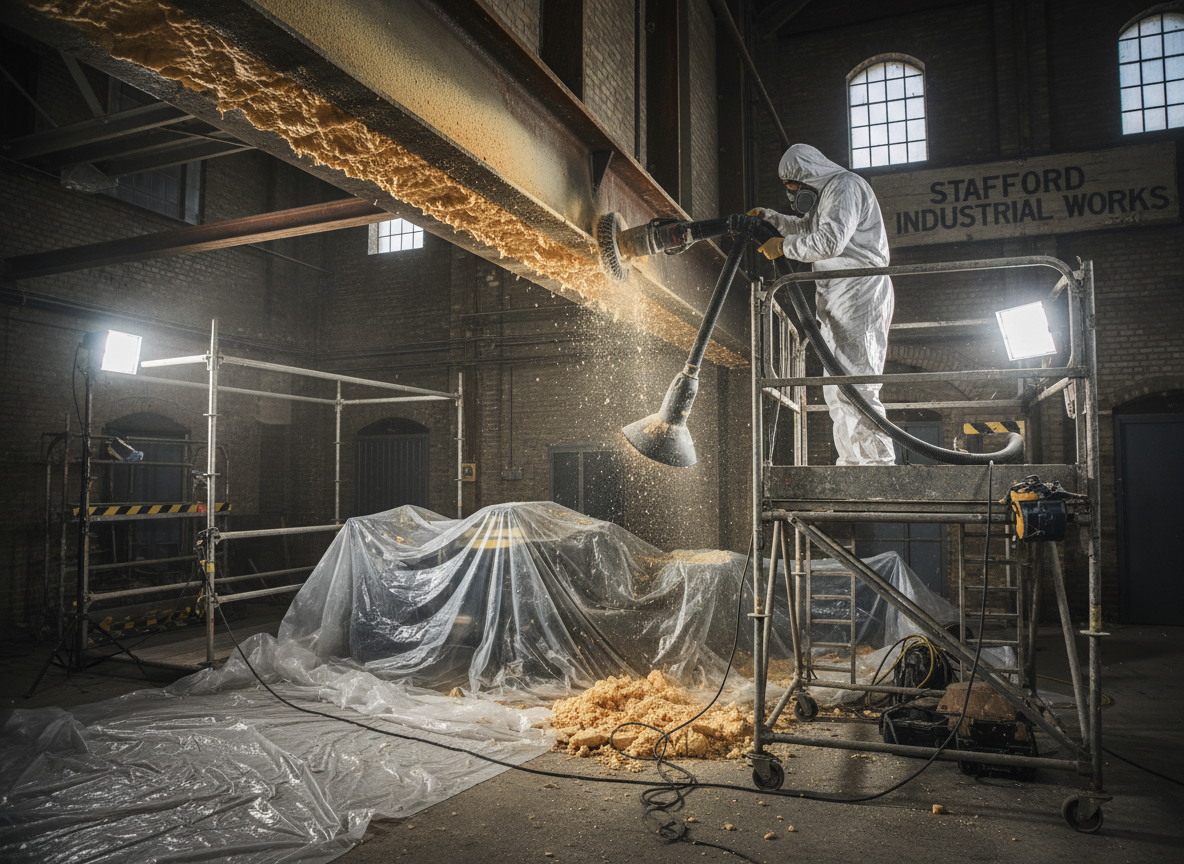
Commercial buildings in Stafford often feature older timber or steel frames with spray foam applied to roofs and walls for insulation. Removing it requires careful separation from substrates to avoid structural damage, especially in properties around the town centre where access is limited by neighbouring structures. Polyurethane foam releases particulates and off-gases during removal, so full containment, negative air pressure and respiratory protection are essential on every job.
Staffordshire weather patterns with frequent rain and high humidity can leave foam saturated, increasing weight and complicating safe cutting and bagging. In commercial settings we also encounter mixed insulation layers, hidden electrical runs and HVAC ducting that must be protected. Local planning and building control requirements for commercial refurbishments mean waste must be documented and disposed of through licensed carriers to keep the project compliant.
Edge cases include foam injected into cavities of 1960s and 1970s industrial units where it has bonded to asbestos-containing materials. We test and isolate these areas first. Ventilation systems in active commercial premises must remain operational or be temporarily sealed, and work is often scheduled outside normal business hours to minimise disruption to tenants.
Proper removal restores the original substrate condition so new insulation or coatings can be applied without adhesion issues. Incomplete extraction leaves residue that can cause future moisture trapping and corrosion on metal decking common in Staffordshire commercial roofs.
Technician insight
In Stafford, the thing that catches most people out with Commercial Spray Foam Removal is the older industrial units near the railway station where foam was sprayed directly onto corroded metal decking; once you start peeling it the decking can flex and crack if you don't support it properly from below.
Office Unit Roof Insulation Removal
A commercial unit on the edge of Stafford town centre needed the roof foam stripped before re-covering. We found the foam had soaked up years of leaks and was bonded to both timber and steel. Extraction was done section by section with temporary propping in place. The roof was left clean and the tenant returned to normal trading within four days.
How it works
- 1
Site Survey and Risk Assessment
We inspect the commercial property in Stafford, identify foam type, substrate condition, access routes and any hidden services before preparing a method statement.
- 2
Containment and Ventilation Setup
Negative pressure enclosures and dust extraction are installed to protect the rest of the building and maintain safe air quality for any ongoing operations.
- 3
Controlled Foam Extraction
Foam is cut, peeled and removed in sections using hand and powered tools suited to the material depth and substrate, with immediate bagging to limit airborne particles.
- 4
Substrate Cleaning and Waste Removal
Remaining residue is cleaned from joists and decking, all waste is weighed and logged, then taken to licensed disposal facilities serving the Stafford area.
- 5
Final Inspection and Handover
The area is checked for complete removal, surfaces are left ready for new works, and documentation is provided for building control records.
Pricing
Pricing depends on building size, foam depth, access restrictions and waste volume; we provide upfront quotes after survey with no hidden fees.