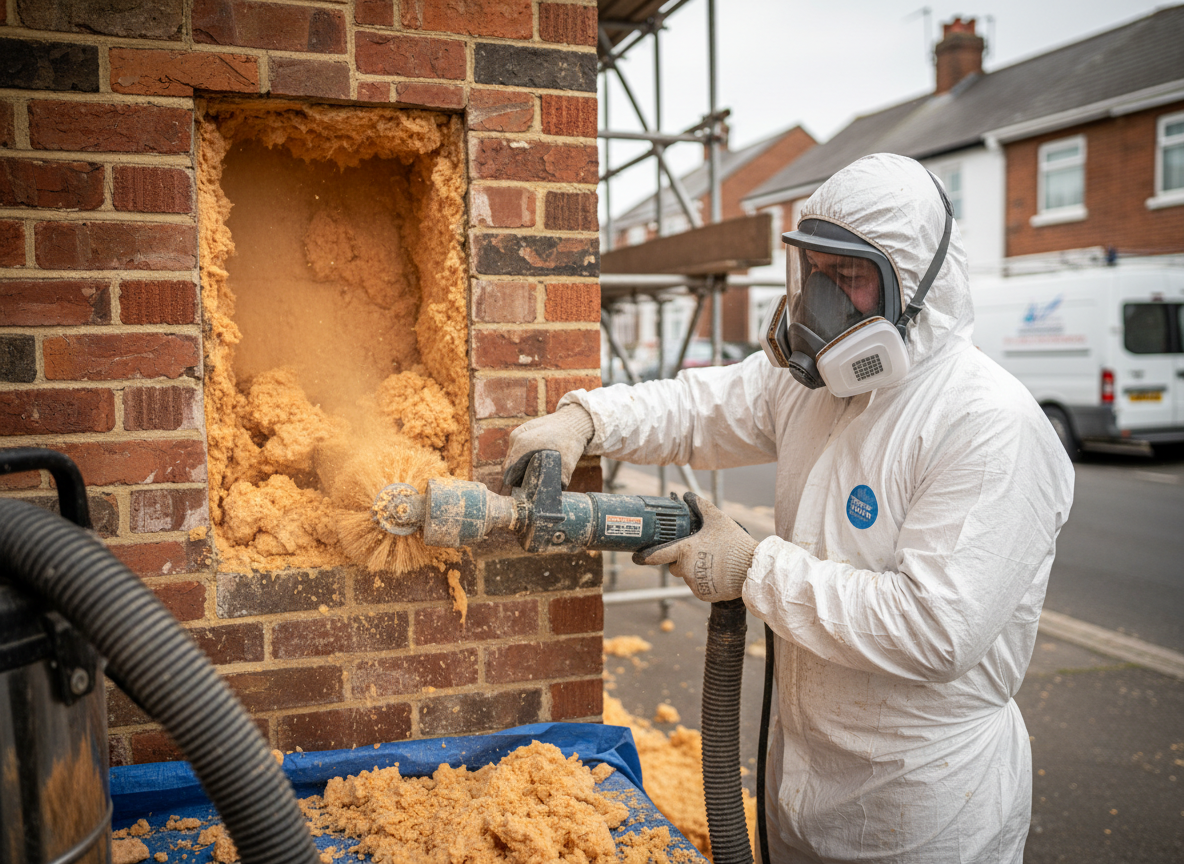
Cavity wall spray foam removal in Stafford often involves properties built between the 1930s and 1970s where the foam has begun to break down and trap moisture against the inner leaf. The narrow cavities common in Staffordshire terraces require slow, controlled cutting and vacuum extraction to avoid damaging the brick ties or pushing debris into the floor voids. Homeowners in areas around Tipping Street frequently report musty smells after heavy rain because the foam blocks weep holes, and removal restores proper ventilation without needing full wall rebuilds.
The process starts with thermal imaging to map foam density, followed by small access points drilled from the exterior. In Stafford's older stock the foam is often urea-formaldehyde type that crumbles into fine dust, so containment sheeting and HEPA filtration are essential to stop particles entering living spaces. After extraction the cavity is inspected for remaining residue and any timber that may have been affected by trapped condensation.
Weather plays a direct role here: prolonged wet winters in Staffordshire mean the job is best scheduled when temperatures stay above five degrees so the cavity can dry before any new insulation is considered. Skipping this drying step leads to recurring mould on the inner walls within a single season.
Technician insight
In Stafford the thing that catches most people out with Cavity wall spray foam removal is the narrow cavities in pre-1970 terraces around the town centre where years of wind-driven rain have packed the foam with silt, making it far harder to pull out cleanly than the loose-fill stuff found in newer estates.
Terraced house near Tipping Street
Homeowner noticed persistent damp patches on the ground floor after winter storms. Inspection showed urea-formaldehyde foam blocking every weep hole in the 1960s cavity walls. We removed the foam through small exterior cuts, cleared the debris and restored airflow; the walls dried out within three weeks.
How it works
- 1
Site Assessment
Inspect cavity depth, foam type and any existing damp using borescope and moisture meters on Stafford properties.
- 2
Access and Containment
Create controlled entry points and seal interior rooms to contain dust during extraction.
- 3
Foam Extraction
Use specialist cutting tools and vacuum systems to remove foam without damaging brick ties or mortar.
- 4
Cavity Clean and Dry
Remove residue, check weep holes and allow the cavity to dry before any further works.
Pricing
Cost depends on property age, cavity depth and how much foam has degraded; quotes are given after inspection.