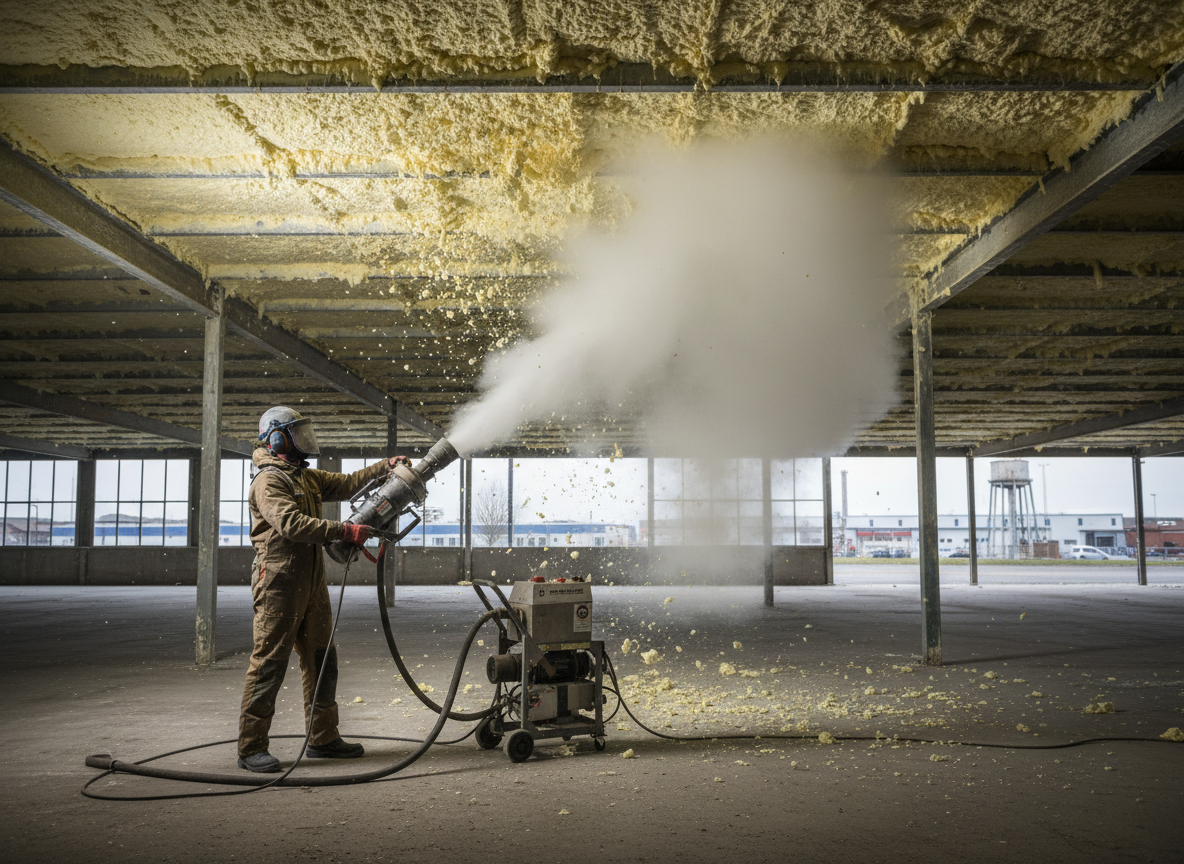
Dry ice blasting removes spray foam insulation by propelling frozen carbon dioxide pellets at high velocity, fracturing the material without damaging underlying substrates. In Stafford properties, particularly post-war semis and older terraces near Tipping Street, the foam often bonds tightly to timber joists and plaster due to decades of condensation cycles from the local climate. The process avoids chemical solvents and leaves no residue, making it suitable for homes where residents need quick reoccupation. Operators must monitor pellet feed rates carefully to prevent over-blasting that could etch brickwork common in Staffordshire construction.
Access constraints in Stafford lofts frequently include low headroom and narrow hatches typical of 1960s and 1970s builds around the town. Dry ice blasting reaches into these confined spaces without the need for full disassembly, though crews still protect electrical wiring and pipework that runs through the foam. Moisture trapped beneath the insulation can release during blasting, requiring immediate extraction to avoid secondary damp issues on ceilings. The method also reduces airborne particles compared with mechanical scraping, an advantage in occupied homes near the town centre.
Regulatory considerations in the Stafford area include ensuring waste foam is bagged and removed to licensed disposal points, as some older formulations contain additives now restricted. Dry ice blasting minimises dust migration into living spaces, which matters in terraced rows where party walls allow sound and particle transfer. Technicians check ventilation paths before starting, especially in properties close to the River Sow where humidity levels stay elevated. The technique preserves roof timbers better than heat or solvent methods, reducing follow-on repairs for homeowners.
Technician insight
In Stafford, the thing that catches most people out with dry ice blasting spray foam removal is how moisture from the nearby River Sow seeps into older loft voids in terraces around Tipping Street, making the foam grip tighter to joists and release hidden damp once blasted away.
Foam Removal in Central Stafford Terrace
Homeowner in a 1970s terrace near the town centre reported musty smells after heavy rain. Inspection found spray foam trapping moisture against ceiling plaster. Dry ice blasting was used to lift the foam cleanly without disturbing wiring. The void was ventilated and dried before reboarding, restoring airflow and eliminating the odour.
How it works
- 1
Initial Site Assessment
Inspect the property in Stafford to map foam depth, substrate condition, and access points while noting any wiring or pipework runs.
- 2
Protection and Containment Setup
Cover floors, seal doorways, and install extraction equipment to manage CO2 release and prevent debris spread into living areas.
- 3
Dry Ice Blasting Application
Apply pellets at controlled pressure to fracture and lift the foam layer by layer, working methodically across ceilings and walls.
- 4
Debris Removal and Final Clean
Collect all loosened material, vacuum residues, and ventilate the space before handover.
Pricing
Pricing varies by foam thickness, access difficulty, and property size in Stafford; contact for a site visit quote.