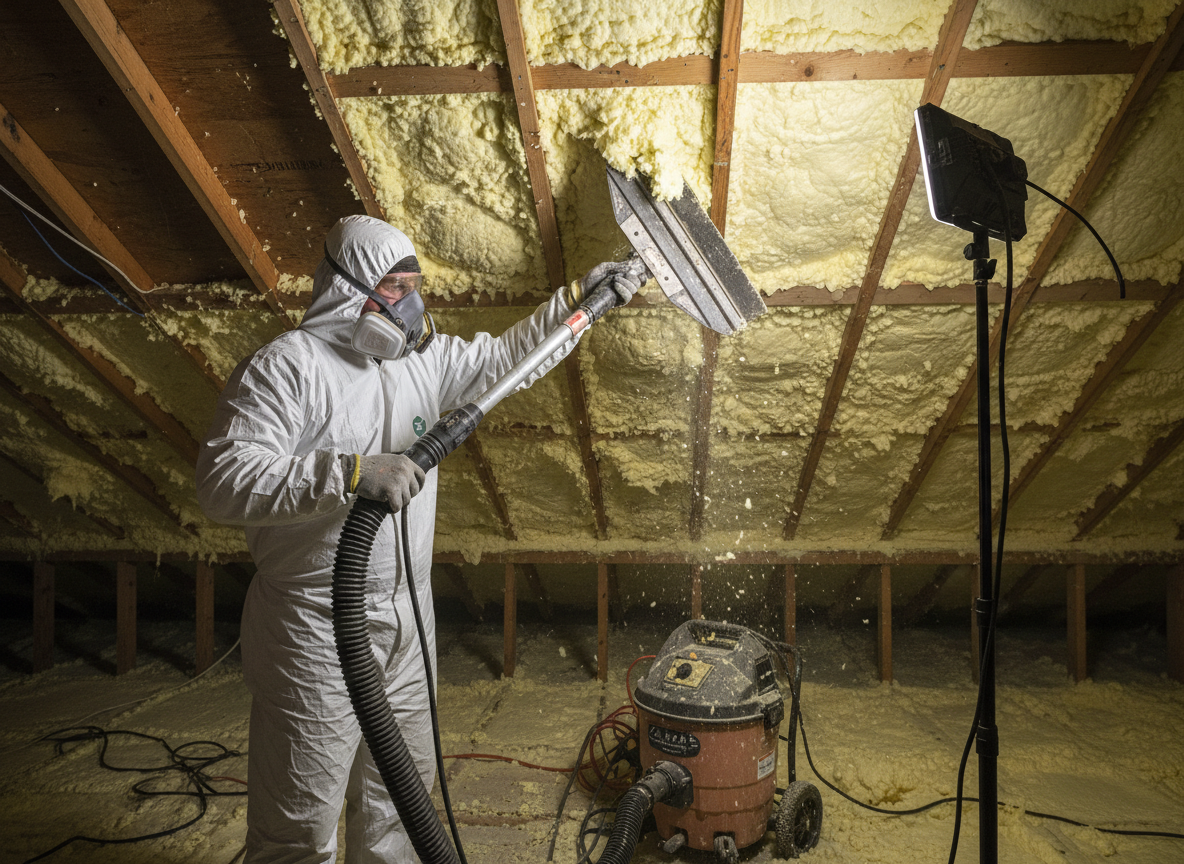
Open cell spray foam bonds tightly to timber joists and plasterboard in Stafford’s older terraced and semi-detached houses. Its open structure lets moisture pass through, so removal must avoid trapping damp against roof timbers or wall plates that are already vulnerable in the county’s wet winters. Technicians cut the foam in sections rather than pulling, because tearing often rips felt or underlay and leaves residue that later causes staining on ceilings.
In many Stafford lofts the foam was sprayed over original lath and plaster or between rafters with minimal ventilation. Cutting too deep damages the substrate; leaving too much behind creates cold spots once insulation is replaced. Edge cases include foam that has wicked into brickwork or around electrical cables, requiring hand tools and vacuum extraction to prevent dust settling into finished rooms below.
Disposal follows local waste rules for Stafford Borough. Foam offcuts are bagged on site and taken to licensed facilities rather than mixed with household waste. Homeowners often discover the foam was applied over existing mineral wool, which then needs separate removal to meet current ventilation standards in the roof void.
Common Mistakes Homeowners Make
Attempting DIY removal with a scraper usually leaves a thin film that re-expands when painted over. Skipping containment allows dust to travel through the house via shared chimney flues common in Staffordshire terraces.
Technician insight
In Stafford, the thing that catches most people out with open cell spray foam removal is the number of Victorian terraces where the foam was sprayed straight onto the original lath and plaster ceiling. Once you start cutting, the plaster keys break and you end up having to repair the ceiling from below as well.
Terraced House Loft in Stafford Town Centre
Homeowner reported damp patches on bedroom ceilings after heavy rain. Inspection found open cell foam covering the entire roof void and trapping moisture against the ridge board. We cut and vacuumed the foam in sections, cleared residue from the rafters, and confirmed the original felt was intact. The loft now ventilates properly and no further damp has appeared.
How it works
- 1
Initial Loft Assessment
Inspect foam depth, substrate condition and any hidden electrical or plumbing runs before work starts.
- 2
Containment Setup
Seal stairwells and rooms below with sheeting and negative air to keep dust out of living spaces.
- 3
Sectional Cutting and Extraction
Cut foam into manageable pieces with oscillating tools, vacuum immediately and remove in sealed bags.
- 4
Substrate Cleaning and Final Check
Scrape residue, vacuum joists and rafters, then confirm no foam remains before handover.
Pricing
Cost depends on loft size, foam thickness and access difficulty; site visit required for accurate quote.