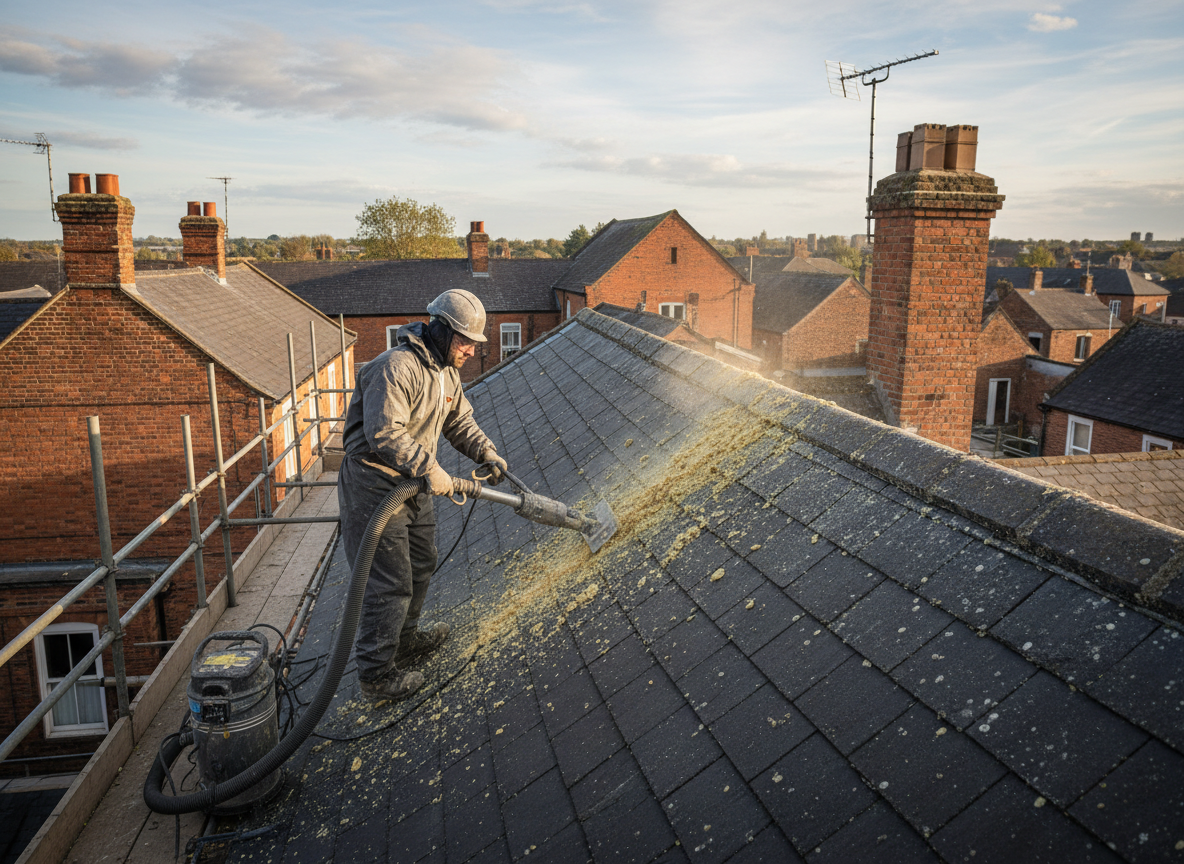
Roof spray foam removal in Stafford often involves older pitched roofs on Victorian and Edwardian terraces common in the town centre and outlying villages. These properties frequently have limited loft access and original timber structures that can be compromised if foam was applied directly to rafters without proper ventilation gaps. Removing the foam requires careful mechanical scraping and vacuum extraction to avoid damaging felt or battens, especially when winter rainfall has already saturated the material and increased adhesion.
Staffordshire weather patterns play a direct role in the work. Persistent damp from the county's high rainfall means foam layers can trap moisture against the roof deck, leading to rot that only becomes visible once removal starts. In Stafford and surrounds, crews must factor in sudden showers that can turn a scheduled job into a multi-day process, requiring temporary tarping and dehumidification equipment brought in from the van.
Edge cases include flat roof extensions on 1970s semis around the Doxey and Holmcroft estates where spray foam was used as a quick waterproofing layer. These installations often bond to bitumen, requiring solvent-assisted separation rather than simple peeling. Homeowners sometimes attempt DIY removal first, which leaves partial foam residue that then demands extra surface preparation before any new insulation or covering can be installed.
Regulatory considerations in the Stafford area centre on safe disposal of removed material, which must be taken to licensed waste facilities rather than general landfill. Proper sequencing also avoids disturbing any existing asbestos flashings still present on pre-1980s roofs, a common finding during initial inspection walks in the town.
Technician insight
In Stafford, the thing that catches most people out with roof spray foam removal is how the county's frequent rain soaks into older timber roofs once the foam is stripped, turning a straightforward job into one that needs extra drying time before any new work can begin.
Terrace Roof in Central Stafford
Homeowner noticed damp patches on bedroom ceilings after years of spray foam on the pitched roof. Inspection revealed foam had trapped moisture against the original felt. We removed the foam layer by layer, dried the timbers over two days, and left the loft ready for new insulation without further rot.
How it works
- 1
Site Assessment
Inspect the roof structure, foam thickness, and access points from inside the loft and externally where possible.
- 2
Protection Setup
Install floor coverings, dust barriers, and temporary weatherproofing before starting extraction.
- 3
Foam Extraction
Use mechanical removal tools and industrial vacuums to strip foam while monitoring for hidden damage to timbers or felt.
- 4
Cleanup and Disposal
Clear all residue, bag waste for licensed disposal, and leave the roof space ready for follow-on work.
Pricing
Cost depends on roof size, foam depth, and access difficulty; we provide clear upfront quotes after inspection.