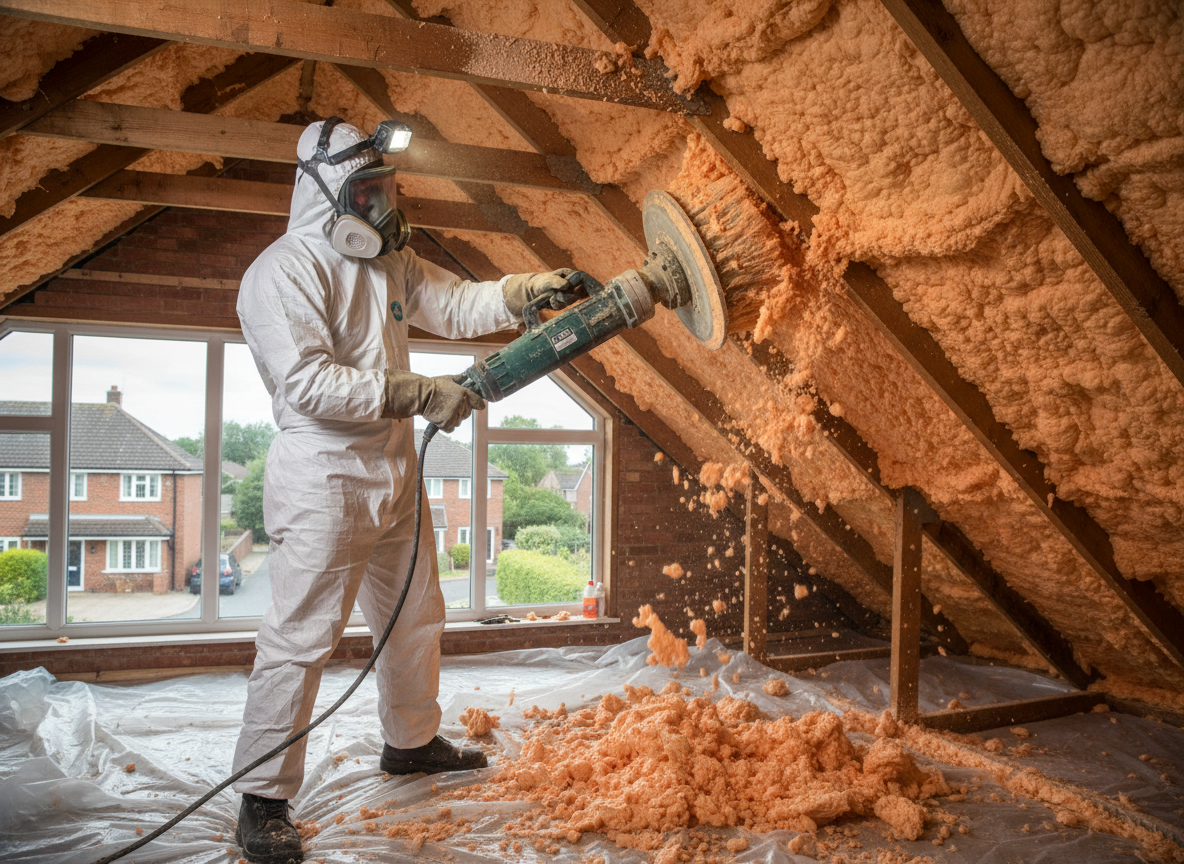
Stafford's housing stock includes many Victorian terraces and 1960s semis where thermal spray foam was applied decades ago to lofts and cavity walls. Over time this material degrades, traps moisture against timber joists and brickwork, and reduces ventilation in properties built before modern building regulations. Removal requires isolating the work area, using negative air machines to control dust, and cutting the foam in sections rather than pulling it in large sheets that can tear underlying plaster or felt.
Winter rainfall common across the Stafford area often leaves roof voids damp, making the foam adhere more tightly to rafters and increasing the risk of substrate damage during extraction. Technicians must work methodically around electrical cables and pipework that run through the insulation, checking each section before cutting to avoid accidental strikes. Post-removal inspection frequently reveals hidden rot or inadequate original ventilation that needs addressing before any new insulation is considered.
Edge cases in the county include listed buildings near the town centre where foam was retrofitted without proper vapour barriers, leading to salt efflorescence on internal walls once the foam is gone. Careful hand removal around heritage features prevents irreversible harm, and all waste is bagged on site for licensed disposal rather than left to blow across nearby gardens or streets.
Seasonal Considerations for Stafford Properties
Wet winters increase foam adhesion in lofts, requiring slower section-by-section removal to protect timber. Summer jobs allow faster progress but demand extra dust containment because open windows in neighbouring homes can spread particles across the street.
Technician insight
In Stafford, the thing that catches most people out with thermal spray foam removal is how moisture from the Trent valley seeps into older brick terraces around Tipping Street, making the foam bond tightly to lime mortar so you have to work slower with hand tools instead of power scrapers.
Loft Removal in a 1930s Terrace
Homeowner noticed musty smells and poor loft ventilation in a Stafford terrace. We found foam bonded to damp rafters and blocking original vents. Careful sectional cutting and hand scraping preserved the timber and felt while removing all material. The loft dried out and airflow improved once the foam was gone.
How it works
- 1
Site Assessment
Inspect the property to map foam locations, identify access points, and note any electrical or structural features that affect removal.
- 2
Containment Setup
Install dust barriers and negative air filtration to protect living spaces and prevent particles from escaping into Stafford streets.
- 3
Foam Extraction
Cut and remove the thermal spray foam in controlled sections, working around joists, cables and pipes without damaging the building fabric.
- 4
Clearance and Disposal
Vacuum residues, bag all waste for licensed removal, and leave the space ready for follow-up ventilation checks.
Pricing
Cost varies with property age, foam depth and access difficulty; upfront quotes provided after inspection.