2026-10-23 ·
How Wet Staffordshire Winters Affect Spray Foam In Attics
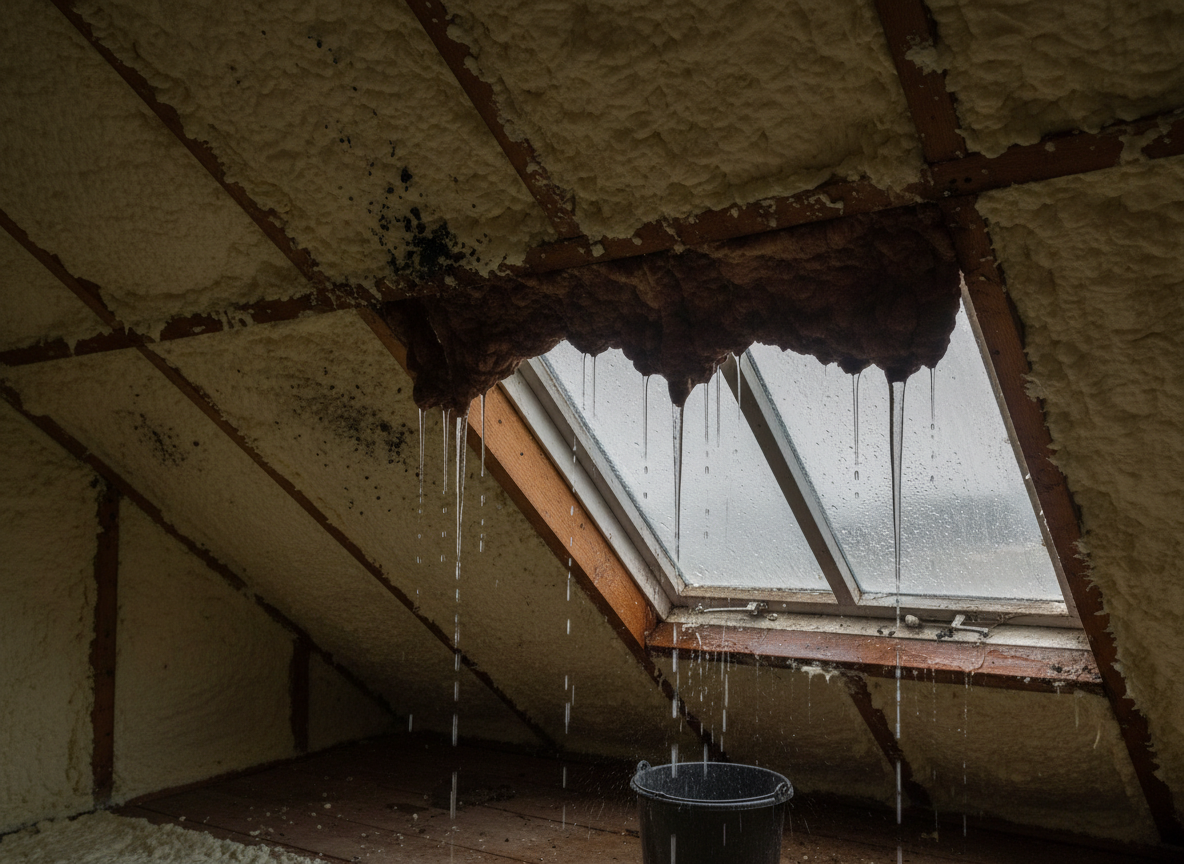
Wet Staffordshire winters accelerate moisture retention in attic spray foam, often dropping effective insulation performance within a single season and prompting removal calls across Stafford and surrounds.
Persistent Rainfall and Attic Condensation
Staffordshire sees frequent winter downpours that saturate roof tiles and allow water to track along rafters into attics. Older terraced and semi-detached homes built before 1950 dominate Stafford neighborhoods, with original timber that readily absorbs this extra moisture. When temperatures swing between freezing nights and mild days, condensation forms on the underside of the roof deck and soaks into open-cell foam. Closed-cell foam resists initial water uptake better yet still traps vapor behind it, creating hidden damp pockets. Homeowners in Penkridge and Eccleshall report similar patterns after successive wet winters, where foam that once felt firm now compresses under hand pressure.
Effects on Foam Performance and Structure
Moisture-laden foam loses up to half its thermal resistance once saturated, forcing heating systems to work harder during long Stafford winters. In lofts where spray foam was applied directly to the underside of the roof, trapped water can migrate to ceiling joists and cause localized rot. This is especially noticeable in properties near the River Sow where groundwater levels stay elevated through winter. The added weight of saturated foam also stresses older ceiling fixings, leading to hairline cracks visible from below. Regular inspection every autumn helps catch these changes before they spread to adjacent rooms.
Local Housing Stock and Winter Patterns
Stafford's Victorian and Edwardian stock features steep pitched roofs that shed rain quickly yet leave attic voids poorly ventilated by modern standards. When combined with the county's typical 150-plus days of measurable rainfall, these voids stay damp for weeks. Stone-built homes in surrounding villages like Stone and Uttoxeter show faster foam breakdown because their thicker walls hold cold longer, increasing the temperature differential that drives condensation. Newer estates on the edge of Cannock and Rugeley use different construction yet still experience the same winter loading when foam was installed without adequate vapor control layers.
Practical Assessment Steps for Homeowners
Begin with a torch-lit loft check after any prolonged wet spell, looking for darkened foam patches or musty odors near the eaves. Note whether insulation feels spongy rather than rigid, a clear sign water has displaced air pockets. Measure the distance from the roof deck to the top of the foam; any compression indicates repeated saturation cycles. For properties within Stafford conservation areas, review the linked guidance on planning notes before scheduling work. Professional assessment using moisture meters provides the clearest picture of how far water has traveled into the structure.
Next Steps After Winter Damage Appears
When winter moisture has compromised attic spray foam, targeted removal restores ventilation and prevents further timber decay. Attic spray foam removal addresses the specific challenges of older Stafford roofs without disturbing ceilings. Homeowners comparing options often review cost factors for spray foam removal in Staffordshire homes to understand variables such as access difficulty and disposal requirements. TrueCoat Specialists remains available 24/7 from 2 Staffordshire Place, Tipping Street, Stafford, ST16 2DH to assess and complete removal when needed.