2026-10-23 ·
Cost Factors For Spray Foam Removal In Staffordshire Homes
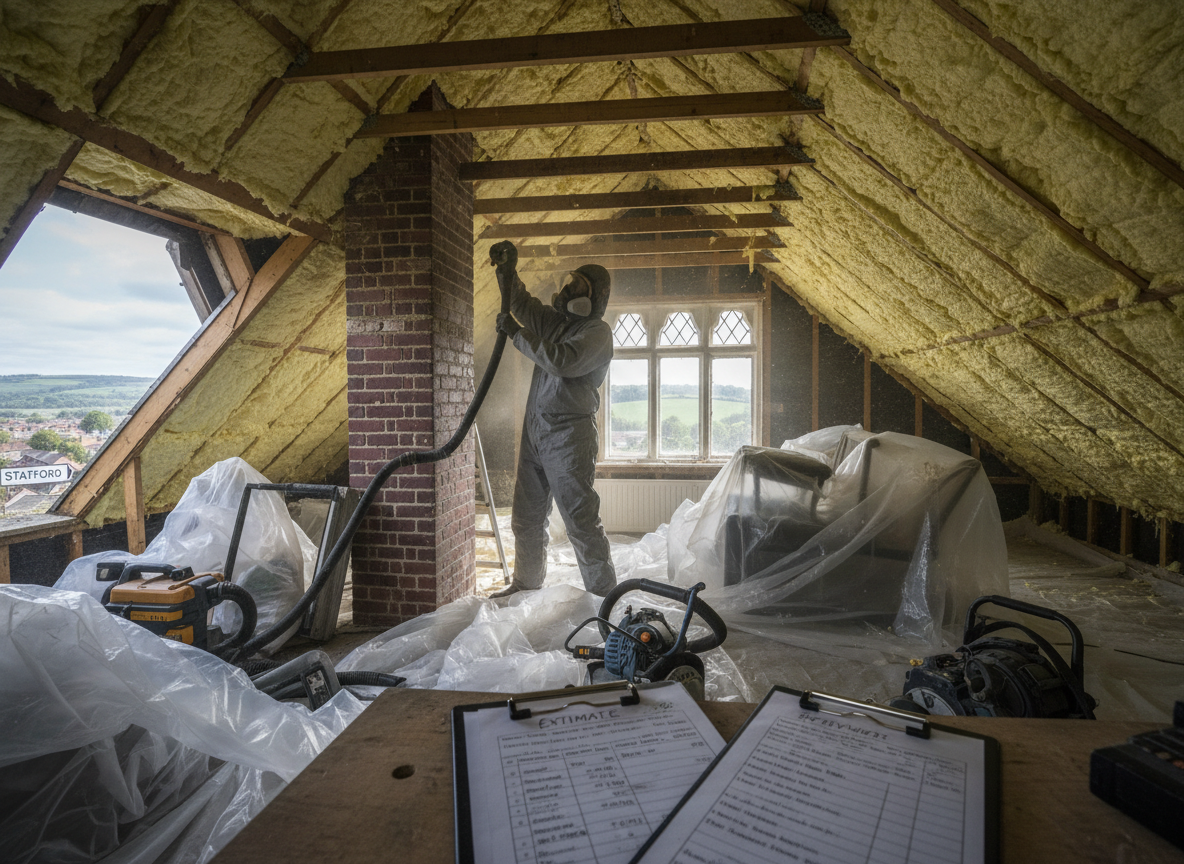
Spray foam removal in Staffordshire homes typically ranges from £1,800 to £5,500 for most residential projects, with final pricing driven by square meterage, foam depth, and property access rather than flat rates. Older terraces in Stafford town centre often sit at the lower end when foam is limited to lofts, while larger post-war semis near Penkridge push higher due to wall cavity work. TrueCoat Specialists at 2 Staffordshire Place, Tipping Street, Stafford, ST16 2DH sees these variables repeat across jobs because local housing stock varies sharply between Victorian stock and 1970s builds.
Property Size and Foam Coverage
Larger floor areas directly increase labour hours and material disposal volume. A standard three-bedroom Stafford terrace might require removal across 60–80 square metres of loft space, while detached homes in Eccleshall or Uttoxeter commonly exceed 120 square metres. Deeper closed-cell layers, often 150–200 mm thick in older installations, add weight and require more passes with extraction equipment. Open-cell foam tends to be lighter but can spread into joist voids, extending time on site. Homeowners should measure accessible areas before quoting because partial removal rarely solves mortgage issues and leaves hidden pockets that later demand return visits.
Type of Spray Foam and Removal Method
Closed-cell foam bonds tightly to timber and masonry, raising costs through slower mechanical scraping or dry ice blasting spray foam removal techniques. Open-cell foam peels more readily yet leaves residue that needs vacuum extraction to prevent re-growth of mould. Properties near conservation areas in Stafford may restrict dust-generating methods, pushing crews toward environmentally friendly insulation removal options that contain debris on site. The choice between sand-blasting and thermal methods also affects weekend or evening rates when residents prefer minimal disruption in terraced streets.
Access Challenges in Local Housing Stock
Stafford’s Victorian terraces and 1950s semis frequently feature narrow loft hatches and shared chimney stacks that complicate equipment movement. Homes in Rugeley and Cannock often sit on sloping plots, requiring extra scaffolding or internal protection for ground-floor rooms. Cavity wall work adds another layer because external brickwork must be protected from staining during extraction. Residential spray foam removal crews plan extra time for these layouts, and jobs in terraced rows can run 20–30% longer than equivalent detached properties simply due to restricted vehicle access and neighbour coordination.
Regional Weather Patterns and Project Timing
Staffordshire’s frequent winter rainfall and high humidity slow drying after foam removal, extending project timelines by several days when moisture levels in timber remain elevated. Summer bookings allow faster turnaround because lofts reach workable temperatures sooner. Properties listed for sale often schedule work during drier months to meet surveyor deadlines. Linking removal timing with mortgage lender spray foam removal requirements helps sellers avoid delays, especially when lenders request documentation that wet conditions can postpone.
Assessment, Disposal and Follow-Up Costs
A proper insulation assessment identifies hidden foam in eaves or under floorboards before work begins, preventing mid-job price increases. Disposal fees rise with volume because Staffordshire landfill sites charge by weight for treated insulation waste. Follow-up inspections confirm no residue remains that could affect future insulation performance. Homeowners reviewing What Stafford Sellers Should Know About Spray Foam Before Listing learn that early assessment often trims total spend by clarifying exact scope rather than relying on worst-case estimates.